

M&S were among P&W’s very first clients. I can’t quite recall how we landed that first project, but since it was more than three and a half decades ago, I’ll forgive myself the lapse.
At the time, P&W was just a two-man band working from a tiny office in Gloucester Place. Fortunately, M&S’s head office was just around the corner in Baker Street, which made us highly responsive; we could be at their door in under five minutes.
We usually slipped in via Rodmarton Street, through the car park and the back door. We were more like tradesmen arriving at a grand house than consultants entering a corporate HQ.
Inside, no Downton Abbey. No grandeur or sweeping staircases: just orderly rows of desks, distinguished only by the endless product samples that covered them.
For three or four years, we worked intensively with M&S, almost entirely on food and beverage packaging rather than clothing (I can’t even recall if homeware was a category at that point).
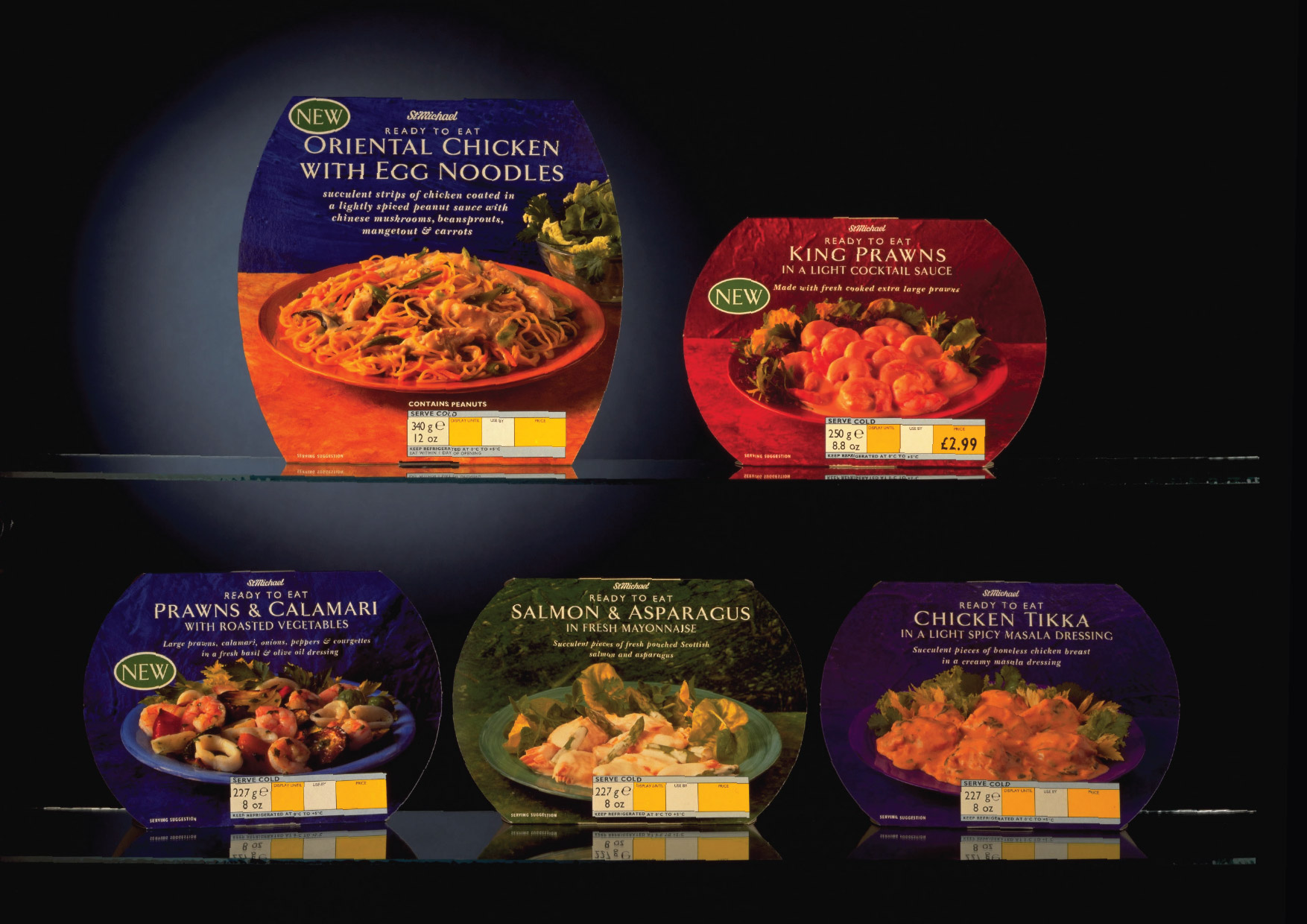
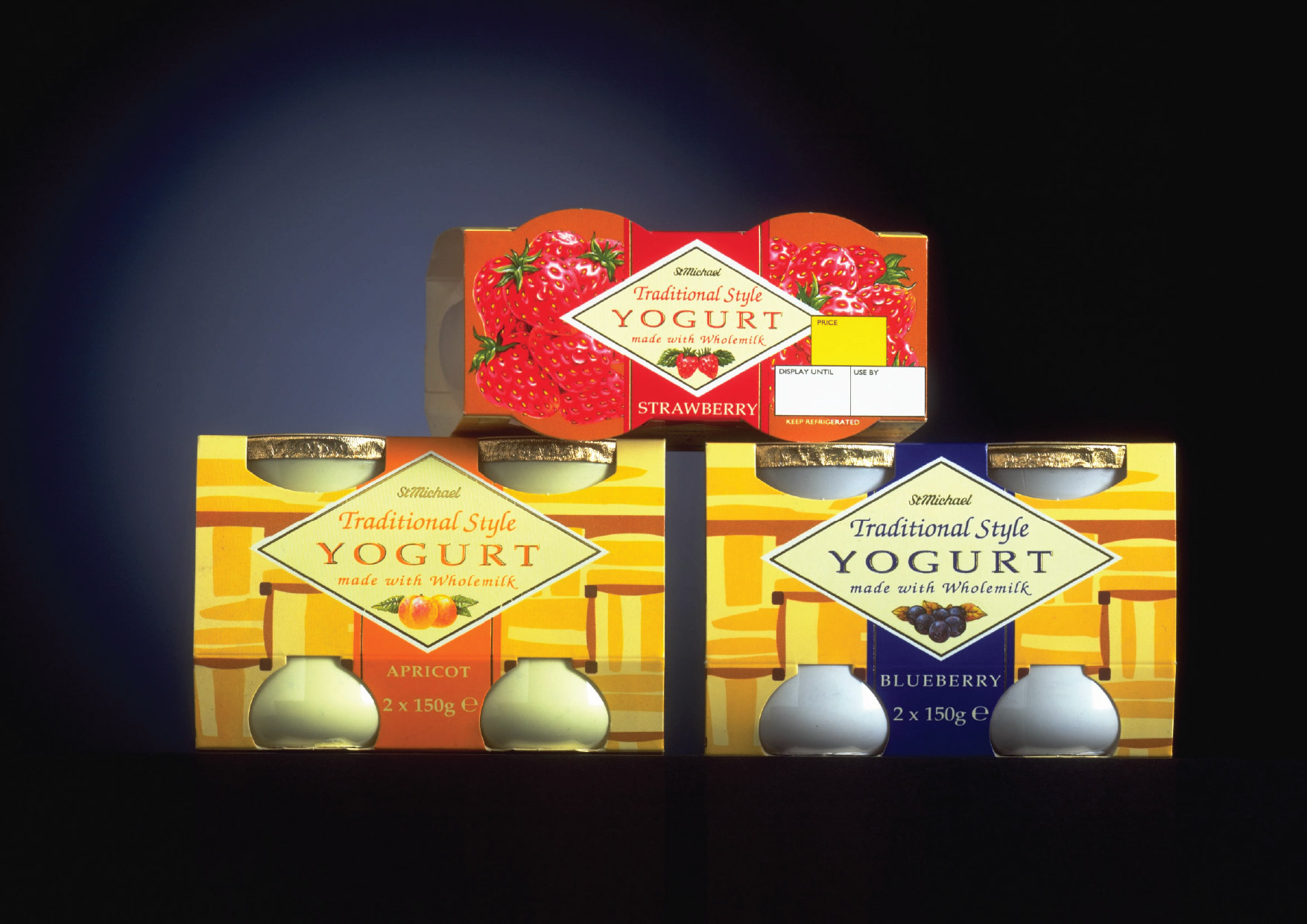
At one stage, they became our single largest client. We built close relationships with several buyers and created designs across a wide spectrum of products, biscuits, cakes, chilled goods, deli items, wines and spirits. Most of them wore the St. Michael badge.
See here some examples we dug out from the archives from 1993-1997!

M&S has always launched new initiatives, many ambitious, others more expected. Their long-term sustainability strategy, fashion collaborations with brands like Jaeger and Per Una, strong stance on ethical sourcing, commitments to carbon reduction and waste minimisation, community support, and, of course, their continued focus on premium food.
All worthy, all purposeful. Yet at times, the vision has felt a little too safe, commendable but predictable, perhaps even a touch prosaic.
What would be more exciting is seeing M&S truly stretch itself. Beyond their deserved reputation as the “posh food supermarket that sells good socks and knickers”. They could take their reputation for quality and push it somewhere only they could go. Carving out a fresh niche. M&S could truly differentiate itself from competitors and showcase its standards in an unexpected way.
unexpectedly shordsFor decades, the St Michael brand did exactly that: a mark of quality, value and reassurance.
Introduced in 1928 as a tribute from Simon Marks to his father, Michael, it once appeared on nearly everything in-store. For customers, it became shorthand for trust. Phased out around 2000 (and briefly revived for menswear in 2021), St Michael has since faded away, except for a nostalgic Take 4 wafer bar, a novelty re-launch back in October.
Yet its symbolism runs deeper. Saint Michael is the archangel, a protector and warrior, guiding people towards truth and courage.
Imagine M&S harnessing that spirit again, using St Michael to embody a new kind of “holistic superiority”, products and experiences that speak to wellbeing, ethics, and aspiration.
This is where a concept like M&S Halo could come to life.
Instead of a token “middle aisle” moment, M&S could create a distinctive in-store experience, a rotating, themed zone unifying food, drink, clothing, homeware, and even new categories such as fitness, health tech and spa services.
Picture walking into a store and discovering something fresh each time. One month: a Scandinavian wellness theme with Nordic skincare, hygge-inspired homeware, and Norwegian seafood paired with herb-infused wines. The next: a British Summer Garden brimming with floral fashion, elderflower drinks, and picnic treats. Unlike short-lived promotions, this would be rooted in substance, anchored in sustainability, ethical sourcing, refillable packaging and carbon reduction.
Crucially, Halo wouldn’t be a novelty or a gimmick. Rooted in sustainability, ethical sourcing and refillable packaging, it would be aspirational rather than obligatory. Beyond products, it could offer in-store yoga, nutrition workshops, artisan pop-ups, or Sparks rewards for well-being choices.
Halo unites M&S’s categories under a single, emotionally resonant theme. It delivers value through wellbeing rather than discounts, setting M&S apart with curated sophistication and ethical depth. More than a store corner, it’s a hub, a place for customers and M&S to share ideas and experiences, reinforcing its reputation for care and quality.
The concept unites M&S’s diverse categories under a single, emotionally resonant theme. It delivers value through wellbeing, not discounts, and sets M&S apart with curated sophistication and ethical depth. More than a store corner, it’s a hub where customers and M&S share ideas and experiences, reinforcing its reputation for care and quality.
As retail shifts from what we buy to how it makes us feel, Halo could spark a new, inclusive conversation, rooted in St Michael’s heritage, yet boldly future-facing.
Controversially, John Timpson once wrote in High Street Heroes (2015):
“M&S is still a good business, but it’s not a great business…. The feeling is similar to watching a well-known football team that has been relegated from the Premier League.”
I must admit, I share his sentiment. My fondness for M&S goes all the way back to 1987/88 and those first meetings in Baker Street, where it still radiated the unmistakable spirit of St Michael.
M&S is far from a brand in crisis. They still lead in premiumisation. But they’ve drifted from the spirit of St Michael, once its symbol of courage, trust and protection. Yet that heritage remains theirs alone. It’s something no one else can claim.
I think a concept like Halo would allow M&S to rise to not just “good”, but “truly great”, leading British retail into a new age.
And it would be heavenly to see them soar once again.


